How mobile security towers support communications in disaster zones and remote environments
Mobile security towers provide rapid, temporary communication coverage after disasters and in remote locations where permanent networks are damaged or unavailable.
In this article
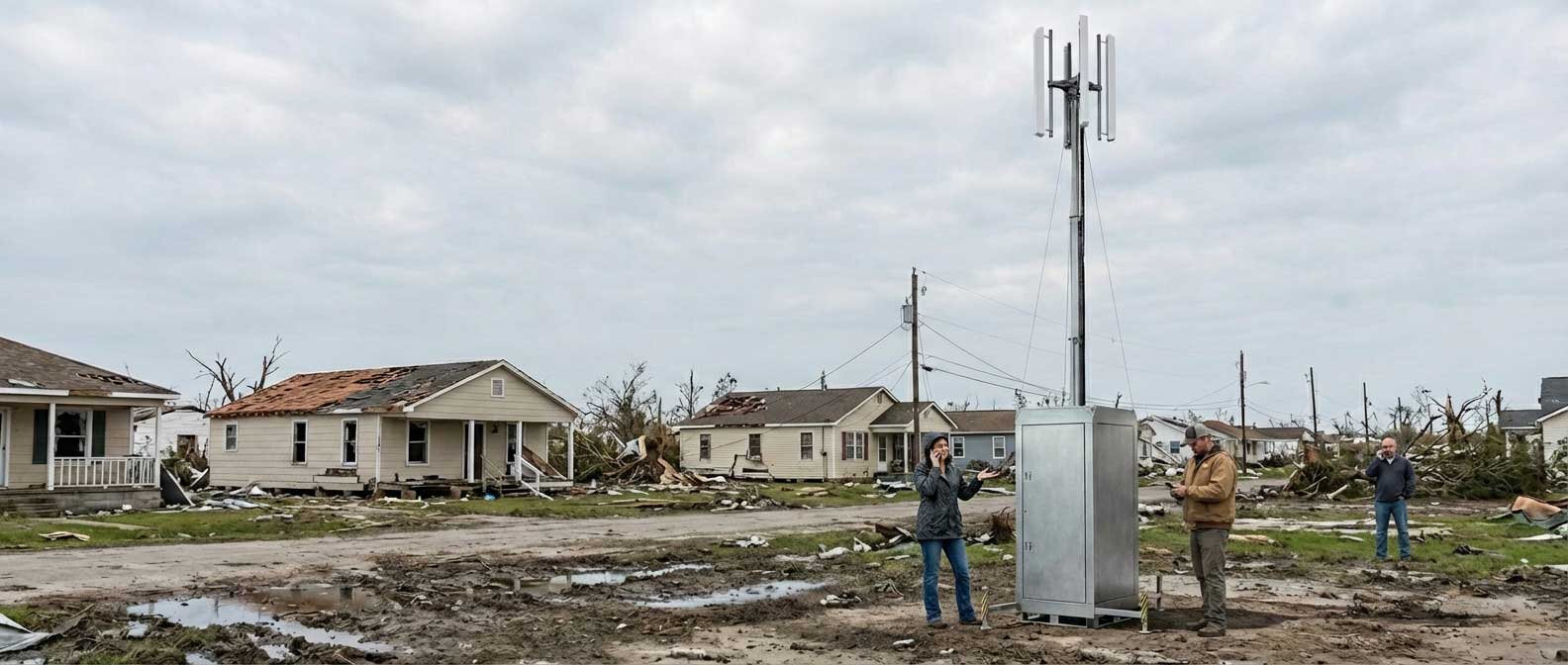
When a disaster strikes, communication systems are often the first to fail and the last to be fully restored. Earthquakes, floods, wildfires, storms and industrial incidents can destroy power supplies, disable networks and block access routes in a matter of minutes. For national governments, emergency services and site security companies, disaster recovery depends on how quickly communications can be re-established in unstable and damaged environments. Mobile security towers have become an important part of this response, offering temporary elevation, flexibility, and reach when fixed infrastructure is no longer usable.
Beyond disaster relief, many regions face ongoing challenges where communications are absent or unreliable. Remote industrial sites, border areas, rural infrastructure projects and temporary operations often have limited coverage. In these circumstances, mobile security towers provide a practical solution for establishing communications where permanent networks are unavailable or impractical.
Why do communications fail during disasters and in remote locations?
Modern communications rely on interconnected systems. Power grids, cellular towers, fibre networks and access roads are all closely linked. During disasters, these systems often fail together, leaving entire regions without coverage or reliable information flow.
In urban disasters such as earthquakes, collapsed buildings and debris can block signals and prevent vehicles from reaching key locations. In the event of flooding, submerged roads and unstable ground can isolate communities and response teams. Wildfires can damage overhead infrastructure and force rapid changes to operational boundaries.
In remote environments, the challenges are different but equally disruptive. Many areas lack permanent coverage due to distance, terrain or cost. Mountain regions, deserts, offshore facilities and rural infrastructure corridors often have limited or inconsistent connectivity. In both cases, establishing communications is essential for safety, coordination and operational continuity.
The role of mobile security towers in establishing communications
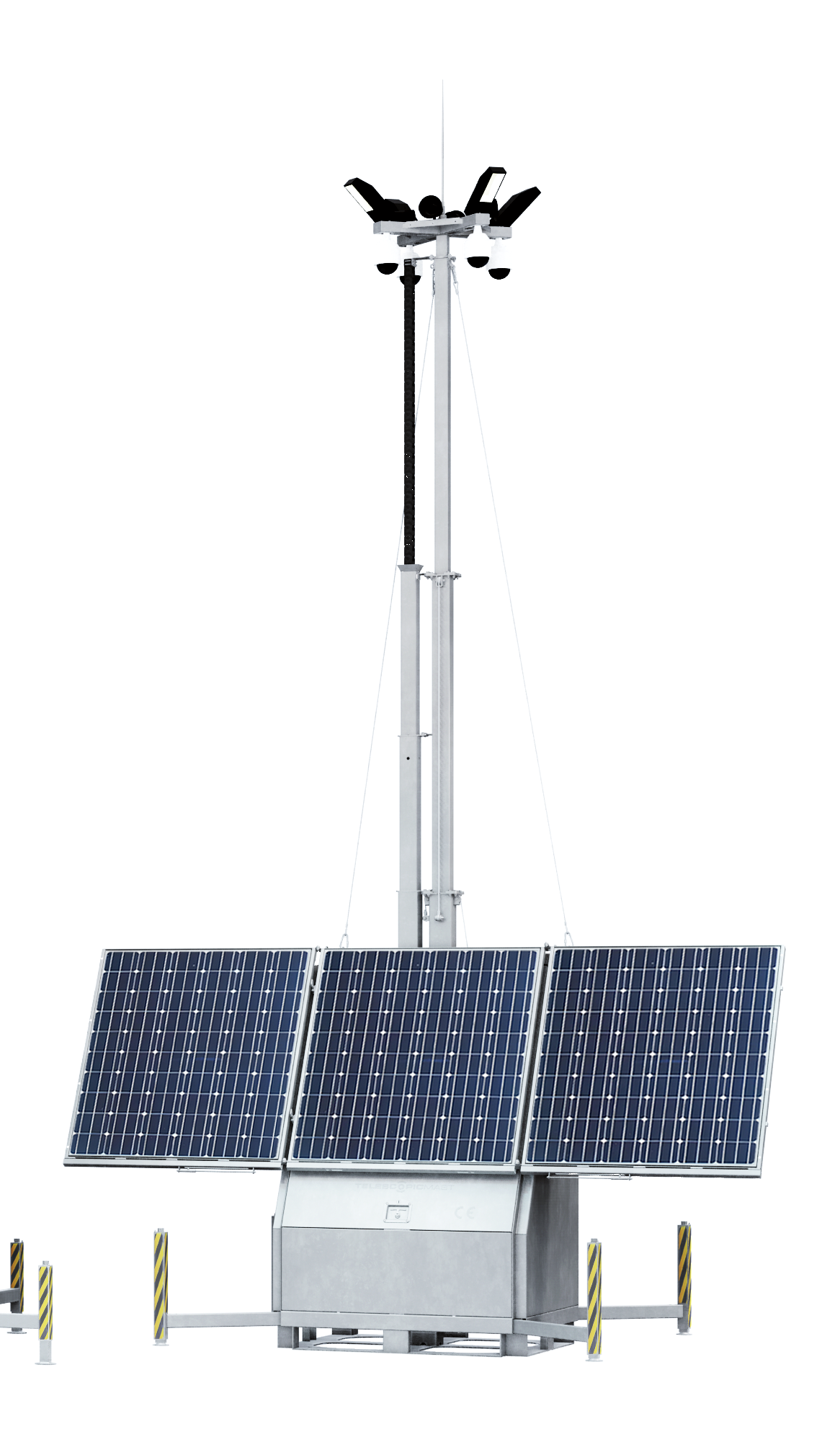
Mobile security towers support disaster recovery and remote operations by providing temporary elevated platforms for communication and monitoring equipment. Typically ranging from 5 to 9 metres in height, the towers allow systems to operate above any obstructions caused by debris, terrain or distance. This elevation improves coverage and visibility in areas where ground-level solutions are ineffective.
Unlike permanent installations, mobile towers do not require fixed foundations or lengthy planning processes. They can be deployed wherever they are needed, relocated as conditions change and removed once operations have ended or infrastructure has been restored. This flexibility makes them suitable for emergency response as well as long-term use in isolated locations.
In both scenarios, the core benefit remains the same. Mobile security towers support the establishment of communications independently of existing infrastructure.
Reaching inaccessible locations through aerial placement
Access is often the defining challenge after a disaster. Roads may be blocked, bridges damaged and the terrain may be unsafe for vehicles. In these situations, mobile security towers can be positioned using helicopters to reach locations that would otherwise remain inaccessible.
This allows response teams to position the towers close to affected zones during the earliest response window. This enables communications to be established more quickly and situational awareness to be achieved earlier. This approach can benefit collapsed urban areas, flood-isolated regions and wildfire perimeters.
The same capability applies to remote operations. In mountainous regions, on islands or in undeveloped terrain, for example, helicopter-assisted placement enables communication assets to be positioned without the need to build roads or permanent structures. This is particularly valuable for temporary projects or time-critical missions.
Disaster scenarios where mobile towers support response efforts
After earthquakes, mobile security towers facilitate communication near collapsed buildings, temporary shelters, and rescue zones. Elevated placement supports coordination between search teams, command units, and perimeter security.
During floods, mobile towers can be positioned near evacuation routes, temporary barriers, or critical infrastructure. This establishes communications in these areas, supporting safer evacuations and ongoing monitoring during prolonged recovery operations.
In wildfire response efforts, mobile towers facilitate communication along fire perimeters and access routes. The ability to relocate communication points improves coordination and safety as conditions change rapidly.
In the event of industrial or environmental incidents, such as chemical spills or infrastructure failures, mobile towers facilitate controlled access and monitoring while permanent systems undergo repair. Their temporary nature enables coverage to adapt as risks evolve.
Use of mobile security towers in remote and low-coverage environments
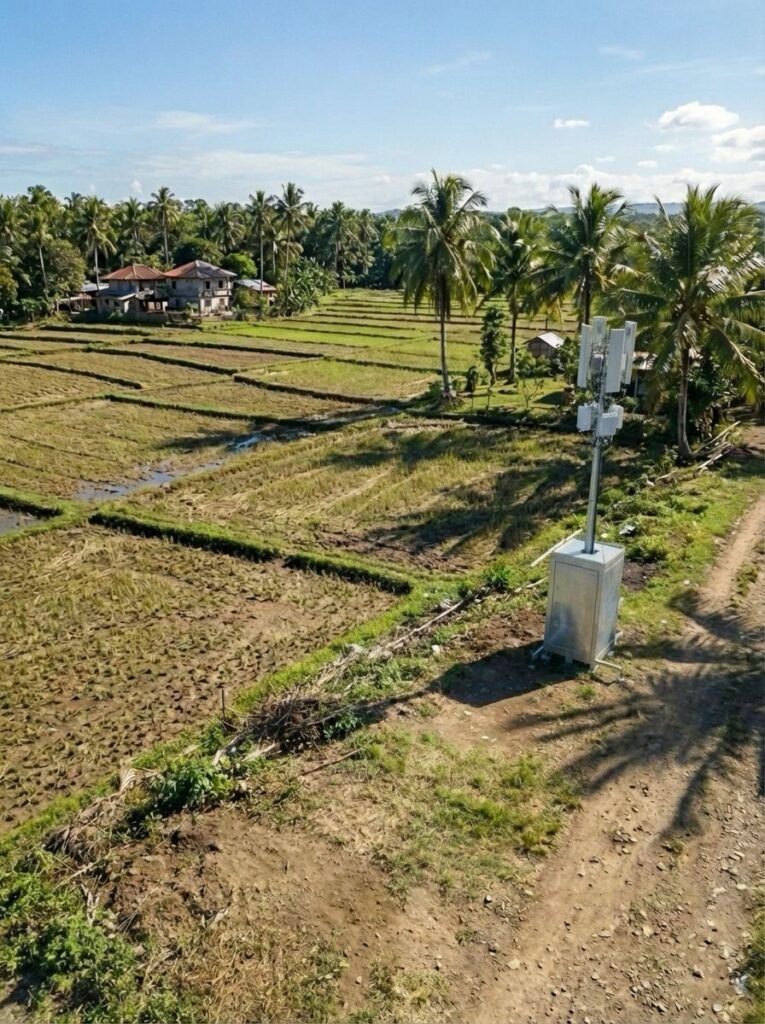 Outside of disaster relief, mobile security towers are widely used in areas where communications are absent or unreliable. Remote construction projects, energy installations, mining operations and border regions often require temporary communication coverage to support safety and coordination.
In rural infrastructure projects, mobile towers help to establish communication links along rail lines, pipelines and roadworks that extend far beyond existing networks. Elevated platforms improve signal reach and support oversight across large areas.
At isolated industrial sites, mobile towers facilitate operational monitoring and coordination without the need for permanent installations. This reduces dependency on fixed networks that may be unavailable or unsuitable for temporary operations.
In security-sensitive environments, such as remote facilities or temporary camps, mobile towers facilitate controlled access and situational awareness. Improving communication in these locations enhances response capability and mitigates the risks of isolation for personnel.
Supporting coordination between agencies and teams
Whether responding to disasters or operating in remote regions, coordination between multiple organisations is essential. Emergency services, government agencies, private security providers and operational teams must share information clearly and consistently.
Mobile security towers facilitate this coordination by establishing shared communication and observation points. They help align actions, improve awareness of developing risks and enable safer decision-making in complex environments.
For site security companies, mobile towers facilitate monitoring and access control in challenging locations. For governments and emergency services, they facilitate oversight where permanent infrastructure is unavailable.
Planning for preparedness and remote operations
The effectiveness of disaster recovery and remote operations depends heavily on preparation. Organisations that plan for communication gaps before they occur are better positioned to respond quickly and safely.
Mobile security towers should be considered an integral part of preparedness and operational planning, rather than merely an emergency improvisation. Pre-planned deployment strategies, including aerial placement options, enable communications to be established more quickly when infrastructure is damaged or absent.
For national governments and emergency services, this approach supports resilience and continuity. For site security companies and operators in remote environments, it provides a practical means of maintaining communication wherever operations are taking place.
Disasters and remote operations will continue to challenge traditional infrastructure. The ability to quickly establish communications, even in the most challenging conditions, remains critical for safety, coordination and an effective response.
More articles about the use of mobile surveillance towers on this topic
- How mobile security towers support communications in disaster zones and remote environments
- Early detection of wildfires using mobile surveillance towers
- How mobile security towers can help during natural disasters
AI-generated image notice
This blog post features an image that was largely created with the help of AI. It is intended solely to provide a visual impression of our product. It is for illustrative purposes only and may not represent the final product in every detail. No rights or claims of any kind may be derived from or based on this image.