Level crossing safety with mobile security towers
Mobile security towers improve level crossing safety through flexible surveillance, early detection and audible warnings for monitoring remote railway environments.
In this article
Collisions at level crossings remain a major safety concern for rail operators and public authorities. Such incidents involve people, vehicles or objects entering the track area. Some events are accidental, while others are deliberate.
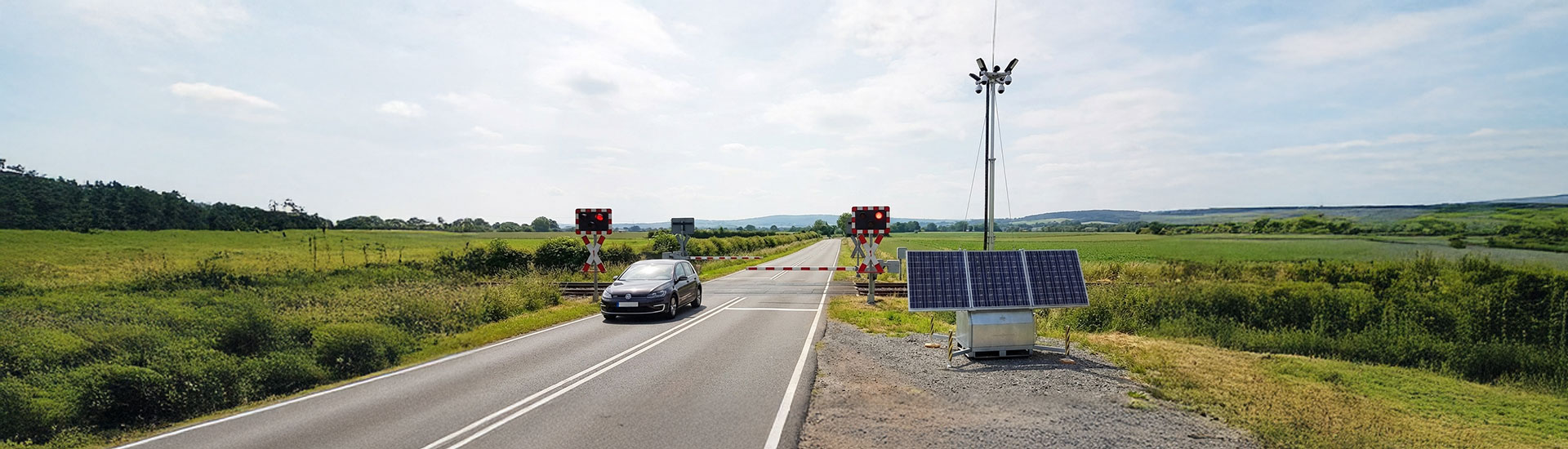
Level crossings are challenging locations to monitor continuously. Many are located in remote areas or along long rail corridors, making the installation of permanent monitoring systems impractical. Mobile security towers provide a flexible surveillance option that increases visibility and awareness around these locations.
These towers can carry cameras, detection devices, lighting and audible warning systems. When connected to monitoring centres, they enable operators to observe activity near railway tracks and respond to risks as they arise.
Ensuring public safety at railway level crossings is challenging
Railway level crossings bring road traffic, pedestrians and rail transport together in a shared space. This combination can quickly create safety risks. For example, vehicles may stop on the tracks due to congestion or driver error. Pedestrians may also cross outside designated areas or enter restricted zones. Objects may also be left on the rail line, creating hazards for approaching trains.
It is difficult to monitor these areas continuously. Many level crossings are located away from staffed facilities or security personnel. Crossings in remote or rural areas may only have signage or basic warning systems. Additional observation and early detection systems can support public safety in these locations. Surveillance towers provide a way of monitoring activity near the tracks without the need for permanent infrastructure.
This article explains how mobile security towers can support level crossing safety
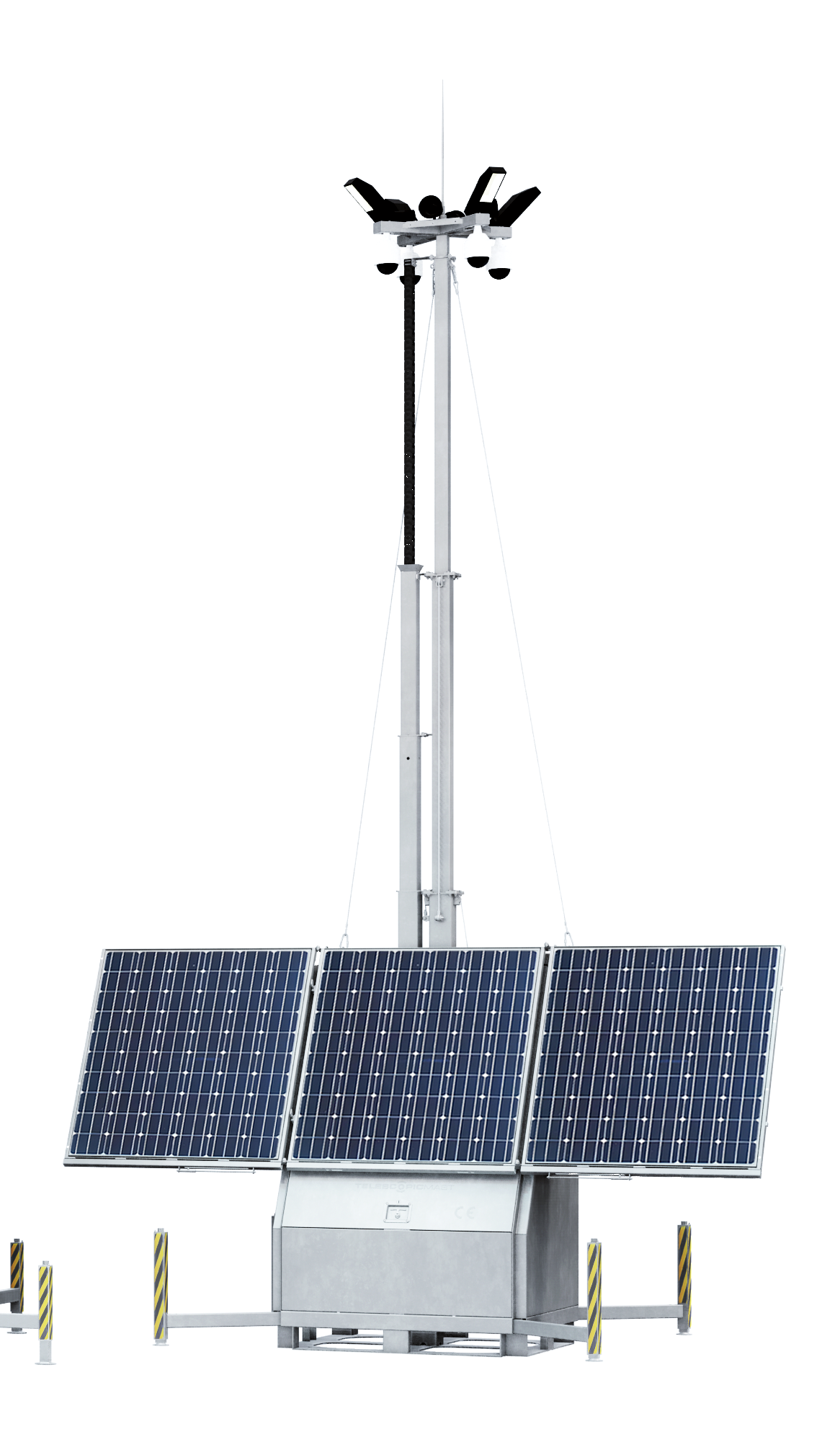
Mobile security towers are designed for temporary or remote monitoring applications. They can be positioned near level crossings, infrastructure corridors, and other high-risk rail environments. The telescopic mast structure raises cameras and sensors above ground level. Many masts extend to approximately six metres, enabling the surrounding area and the track environment to be observed from an elevated position. This elevated perspective improves visibility of vehicles, pedestrians and obstacles near the level crossing. Cameras can monitor both the rail line and the surrounding access areas.
As the system is mobile, operators can reposition the towers if monitoring requirements change. This flexibility is useful during infrastructure projects, temporary traffic changes, and safety investigations near rail crossings.
Early warning systems use cameras, detection systems and audible alerts
Mobile surveillance towers facilitate the early identification of activity near railway tracks. Cameras mounted on the mast can observe movement within the crossing area and the surrounding approaches. Detection devices can monitor motion within defined zones. When activity is detected near the tracks, alerts can be sent to monitoring centres for review. Operators can then assess the situation using live camera feeds. If necessary, they can respond using the audible warning systems installed on the tower.
Public address systems enable operators to broadcast spoken warnings to individuals approaching restricted rail areas. These messages can instruct pedestrians or drivers to move away from the tracks or leave the level crossing. Audible warnings are particularly useful when individuals are unaware of or distracted by approaching trains. A direct voice warning can quickly attract attention and encourage people to move to a safe location. In many cases, an audible warning can prevent unsafe behaviour from escalating into a dangerous situation.
Supporting remote railway infrastructure monitoring
Railway infrastructure often passes through remote areas where direct supervision is limited. Such locations may include isolated level crossings, rail corridors, maintenance areas, and utility infrastructure near the rail network.
Mobile surveillance towers can serve as remote monitoring points in such environments. Cameras transmit video to monitoring centres, where operators can observe activity and respond to unusual situations. This monitoring capability enables security teams to maintain situational awareness across multiple railway locations without installing permanent surveillance systems. Consequently, rail operators and security providers can extend observation along rail corridors where additional monitoring is required.
Design features that support railway monitoring
The design of the surveillance tower is important in outdoor railway environments. Telescopic masts are made of galvanised steel to ensure durability during long-term outdoor use.
High-grade steel cables support the mast and help maintain stability when the structure is fully extended. This reduces camera movement and helps to maintain clear video images in windy conditions.
Lockable cabinet doors protect internal equipment such as recording devices, batteries, and communication systems. These cabinets protect the electronics from tampering and adverse weather conditions.
The visible height of the mast increases the presence of the monitoring system. A highly visible surveillance structure can deter people from entering restricted areas near railway tracks.
Level crossing safety for rail operators and security providers
Mobile surveillance towers support organisations responsible for railway safety.
Security companies can monitor level crossings through central monitoring stations. Operators can review video feeds, evaluate alerts, and issue warnings when activity occurs near the tracks. Security installers and system integrators can deploy mobile towers as part of temporary safety monitoring projects. This may be during rail maintenance work, infrastructure upgrades, or construction near railway lines. Transport companies and rail operators can also use the towers to monitor level crossings where additional observation is required.
As the towers are mobile, they can be relocated as operational needs change. This improves public safety near level crossings, which pose a serious risk to passengers, drivers and pedestrians. Monitoring these locations helps to reduce the risk of accidents.
Mobile security towers provide visible surveillance and early detection, as well as audible warnings, to increase awareness near the tracks.
Cameras, motion detection systems and public address speakers enable control rooms to identify activity and communicate directly with individuals in unsafe areas.
Mobile surveillance towers offer rail operators, security providers and installers a flexible way to support level crossing safety and protect railway infrastructure.
Read more about monitoring in public spaces
- Crowd management at major events with a Mobile Tower Platform
- Level crossing safety with mobile security towers
- How can mobile security towers help protect public events in December?
- Urban safety: the role of mobile security towers in counterterrorism and crime prevention
- Mobile security towers for crowd control and event management
- Advantages of remote object monitoring versus manned guarding
- Redeployable CCTV in public space: the Berlin police at Alexanderplatz
AI-generated image notice
This blog post features an image that was largely created with the help of AI. It is intended solely to provide a visual impression of our product. It is for illustrative purposes only and may not represent the final product in every detail. No rights or claims of any kind may be derived from or based on this image.