Protecting oil refineries with mobile security towers
Mobile security towers provide flexible, certified protection for oil refineries, enhancing surveillance and reducing risk while ensuring environmental compliance and maintaining continuous safety in large, high-risk industrial environments.
In this article
Oil refineries represent some of the most critical infrastructure in the global energy chain. Due to the nature of their operations and the materials involved, they require security solutions that are both robust and adaptable. Mobile surveillance towers provide an effective and highly visible means of safeguarding people, assets and the environment around these sensitive sites.
Understanding the scale and location of oil refineries
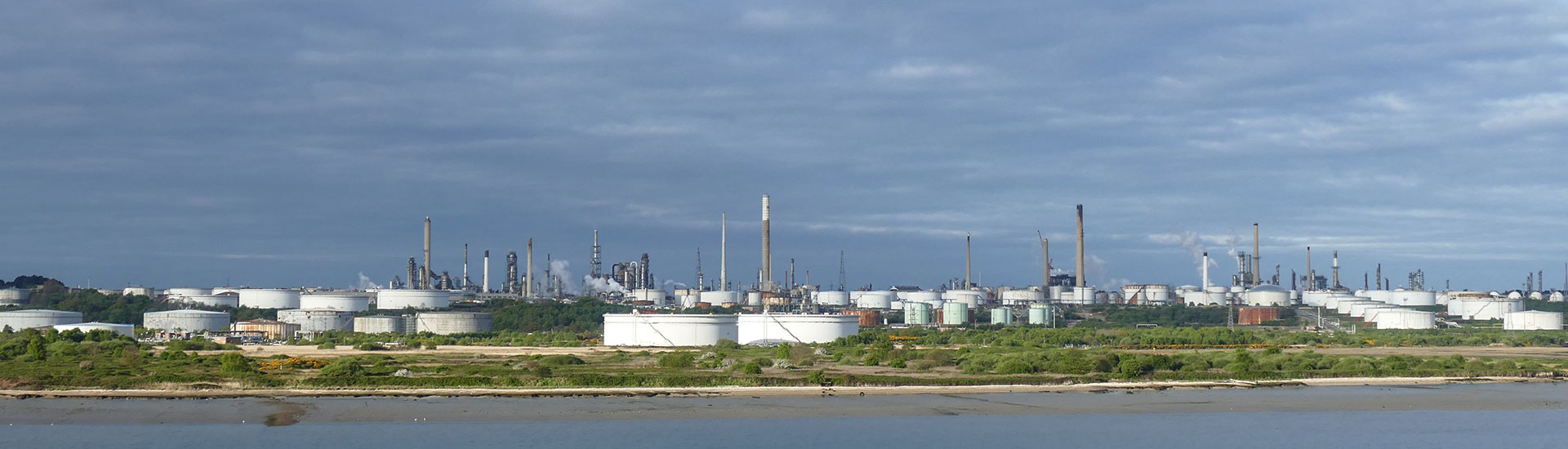
Oil refineries typically span large areas, often covering between 200 and 800 hectares. These complexes include multiple processing units, fuel storage tanks, pipelines and transport links. Most are located in coastal industrial zones, near major harbours or within inland energy corridors. This strategic placement ensures proximity to shipping routes, supply chains, and logistics hubs.
These sites are rarely isolated. They often operate alongside related industries, such as petrochemical plants, chemical storage depots, LNG terminals and pipeline networks. This interconnected environment increases the risk profile, particularly where hazardous materials are handled or stored across adjacent facilities.
Key risks faced by oil refineries and related industries
Oil refineries face distinct threats due to the nature of their materials and processes. The presence of flammable liquids and gases increases the potential impact of intrusions, sabotage or accidental damage. Unauthorised access to restricted areas can lead to safety incidents that can have a knock-on effect across entire facilities.
Environmental damage is another critical concern. A single breach resulting in a fire or leak could affect local ecosystems, neighbouring communities or nearby waterways. Given the scale and complexity of these facilities, it is crucial to identify and mitigate risks promptly, before they escalate into more significant emergencies.
Similar vulnerabilities exist in related industries, such as chemical plants and energy distribution hubs. Their operations involve hazardous compounds, large-scale storage and complex logistics, all of which require continuous monitoring and flexible security coverage.
Enhancing site protection with mobile security towers
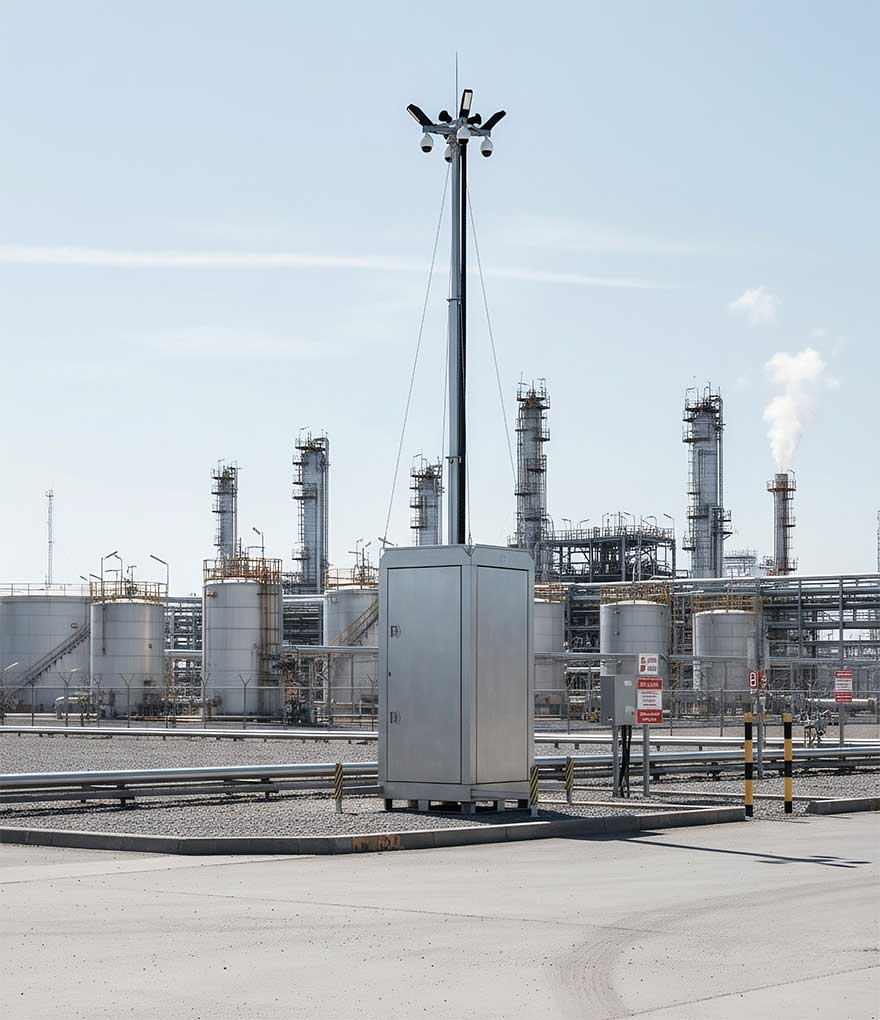
These towers are well suited to the demands of refinery environments. They provide elevated surveillance, enabling the monitoring of wide perimeters, internal zones and external boundaries. With telescopic masts reaching up to six metres, the towers offer panoramic viewing angles and extended detection ranges that surpass those of ground-level systems.
Mounted thermal cameras enhance visibility during low-light conditions or adverse weather, supporting detection along fence lines, access roads and storage zones. Centralised monitoring via 4G/5G connectivity enables instant alerts to be sent to control rooms, facilitating faster coordination and intervention in the event of an incident.
As operational needs evolve, the towers can be relocated to focus on new high-risk areas, such as maintenance zones, construction sites or temporarily unmanned sections of the facility. This flexibility is vital for dynamic sites where the physical layout changes frequently.
Environmental and operational benefits of tower deployment
Mobile surveillance towers are designed to operate efficiently in industrial environments without increasing environmental impact. They can be powered by solar panels, fuel cells or hybrid systems, enabling them to function off-grid while reducing emissions. This makes them ideal for use in environmentally sensitive areas or where access to mains power is limited.
Their galvanised steel construction provides resilience against weather and corrosion, while anti-vandal features protect vital electronics and equipment from tampering. CE certification for all components ensures compliance with international safety standards, reinforcing their suitability for high-stakes security deployments.
Unlike permanent installations, mobile security towers require no groundwork or structural alteration. This enables temporary, targeted security enhancements to be made without causing delays or regulatory issues. They also reduce long-term security costs by decreasing the need for permanent manned guarding.
Certified reliability for critical environments
In petrochemical zones and large seaports, safety is non-negotiable. Every component of a mobile surveillance system must be able to withstand harsh weather and operational stress, day and night. This is why certified reliability is so important when choosing mobile security towers for these environments.
Mobile security towers are independently tested by TÜV SÜD to deliver proven resilience under real-world conditions. Their structural strength has been verified under high wind loads (EN 1991-1-4). Their corrosion resistance is confirmed after 750 hours of salt spray exposure (EN ISO 12944-2). TelescopicMast towers undergo 250,000 up-and-down movements without sustaining any structural damage. The integrity of the welds is inspected via ultrasonic testing (ISO 9712), showing zero defects.
These are not assumptions. They are measurable outcomes. This level of certification ensures that mobile surveillance towers are the reliable choice in situations where equipment failure is not an option. Certified innovation. Proven quality. Visible assurance.
Applications beyond refinery grounds
Mobile security towers are highly versatile and can be used in many different locations. They can be deployed along external pipeline routes, near water entry points or at vehicle inspection zones. In harbours and shipping terminals, they help to monitor high-traffic areas and cargo movements, supporting both private operators and port authorities.
Fuel depots and tank farms also benefit from tower surveillance, particularly during off-peak hours and deliveries. They can also provide coverage for isolated assets, emergency assembly points and remote areas of large industrial estates that are difficult to protect using traditional fixed systems.
Supporting secure operations in volatile environments
Oil refineries and related industries are subject to high safety and regulatory pressures. Mobile security towers are engineered to meet these demands by offering flexibility, durability and visibility in a single solution. These towers provide practical value across a range of operational scenarios, from deterring unauthorised access to supporting faster emergency response.
In volatile or high-risk environments, security measures must evolve alongside the site. Mobile surveillance towers provide operators and security providers with the means to adapt swiftly, thereby strengthening resilience and maintaining continuous oversight of critical infrastructure.
Articles about securing critical infrastructure
- KRITIS Germany and EU critical infrastructure: the importance of certified mobile security towers
- Protecting oil refineries with mobile security towers
- Strengthen airport safety and logistics continuity with mobile security towers
- Strengthening data centre protection with mobile surveillance towers
AI-generated image notice
This blog post features an image that was largely created with the help of AI. It is intended solely to provide a visual impression of our product. It is for illustrative purposes only and may not represent the final product in every detail. No rights or claims of any kind may be derived from or based on this image.